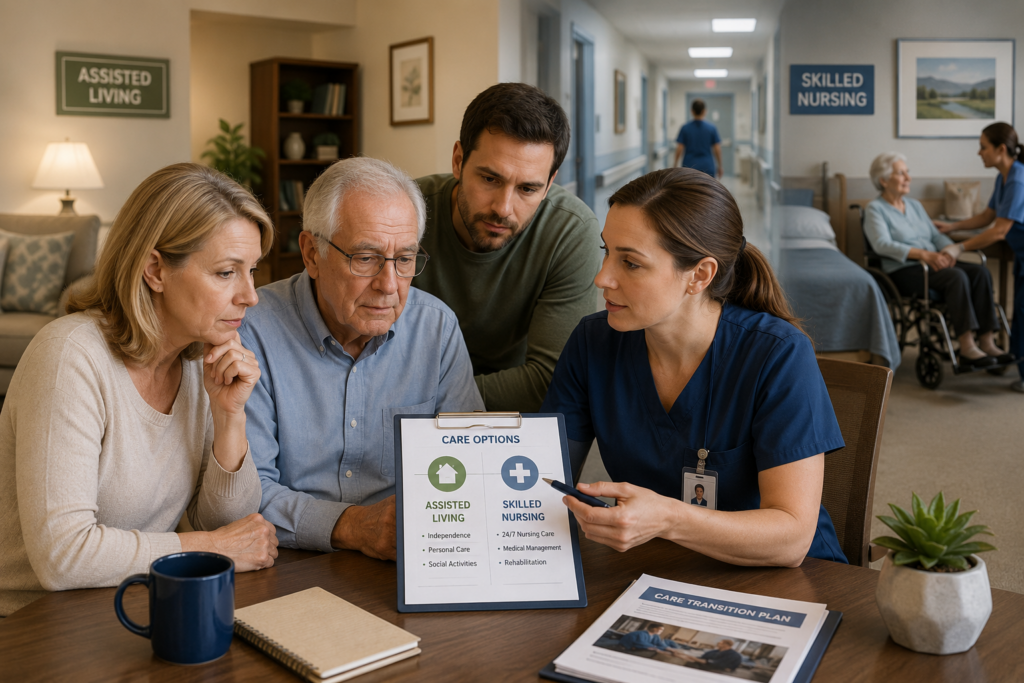
Introduction
When to move from assisted living to skilled nursing is one of the most difficult decisions families face as an aging loved one’s health changes.
Many seniors thrive in assisted living for years, enjoying independence while receiving help with daily activities. However, as medical conditions become more complex or functional abilities decline, there may come a point when the level of care available in assisted living is no longer sufficient.
Recognizing the signs early can help families plan thoughtfully instead of making rushed decisions during a medical crisis.
In this guide, you’ll learn:
- The most common signs that a move to skilled nursing may be necessary
- How medical needs differ between assisted living and skilled nursing
- Questions to ask healthcare providers
- How to prepare for a smooth transition
- Resources that may help pay for skilled nursing care
At a Glance
| Category | Information |
|---|---|
| Best For | Families evaluating changing care needs for an aging loved one |
| Estimated Reading Time | 11 minutes |
| Last Updated | July 2026 |
| Who Should Read This | Adult children, caregivers, and seniors planning future care |
| What You’ll Learn | Warning signs, care requirements, transition planning, and next steps |
When to Move From Assisted Living to Skilled Nursing
There is no single event that signals it’s time to move from assisted living to skilled nursing. Instead, families often notice a pattern of increasing medical needs, declining mobility, or frequent health emergencies that exceed what an assisted living community can safely provide.
While every person’s situation is unique, certain warning signs consistently indicate that a higher level of care should be considered.
Why the Right Level of Care Matters
Choosing the appropriate care setting affects more than medical treatment.
The right environment can improve:
- Safety
- Quality of life
- Recovery after illness
- Medication management
- Access to rehabilitation
- Peace of mind for family caregivers
Waiting too long to transition may increase the risk of falls, hospitalizations, medication errors, and preventable health complications.
15 Signs Families Should Know
1. Frequent Hospitalizations
Repeated trips to the emergency department or multiple hospital admissions within a short period often indicate that a person’s healthcare needs have become more complex.
Skilled nursing facilities provide continuous clinical oversight that may help reduce avoidable hospital readmissions.
2. Medical Needs Become Increasingly Complex
If your loved one now requires:
- IV medications
- Wound care
- Feeding tube management
- Oxygen therapy
- Complex medication adjustments
they may need services that exceed what assisted living communities typically provide.
3. Significant Decline in Mobility
A senior who previously walked independently may now require:
- Two-person transfers
- Mechanical lift assistance
- Wheelchair mobility
- Extensive help moving safely
These changes often require trained nursing staff available around the clock.
4. Falls Become More Frequent
Occasional falls should never be ignored.
Repeated falls may indicate:
- Muscle weakness
- Medication side effects
- Balance disorders
- Progressive neurological disease
A skilled nursing facility can provide rehabilitation and continuous monitoring to reduce future fall risk.
5. Rehabilitation Is Needed Several Times Each Week
Following surgery, stroke, or serious illness, some seniors require:
- Physical therapy
- Occupational therapy
- Speech-language therapy
multiple days each week.
These rehabilitation services are commonly available within skilled nursing facilities.
6. Chronic Medical Conditions Become Difficult to Manage
Conditions such as:
- Congestive heart failure
- COPD
- Parkinson’s disease
- Advanced diabetes
- Kidney disease
may require frequent nursing assessments and closer medical supervision than assisted living can typically provide.
7. Medication Management Becomes Increasingly Complicated
When medication schedules become more complex—or frequent adjustments are required—licensed nursing oversight can reduce the risk of missed doses, interactions, and medication errors.
8. Cognitive Changes Affect Safety
Progressive memory loss, confusion, or impaired judgment can increase the risk of wandering, missed medications, and unsafe behaviors.
Although some assisted living communities offer memory care, advanced cognitive decline combined with significant medical needs may make skilled nursing the safer option.
9. Daily Medical Monitoring Is Required
One of the clearest indicators that skilled nursing may be necessary is the need for frequent medical observation.
Examples include:
- Daily nursing assessments
- Monitoring blood pressure or blood sugar multiple times a day
- Managing complex medication changes
- Ongoing evaluation of chronic medical conditions
- Monitoring recovery after surgery or hospitalization
These services generally require licensed nursing staff available 24 hours a day.
10. Personal Care Needs Continue to Increase
Many seniors eventually require extensive assistance with Activities of Daily Living (ADLs), including:
- Bathing
- Dressing
- Toileting
- Eating
- Transferring between bed and chair
When nearly every daily activity requires hands-on assistance, skilled nursing may provide a safer level of care.
11. Weight Loss or Poor Nutrition Becomes a Concern
Unexpected weight loss, dehydration, or difficulty swallowing may indicate the need for closer medical supervision.
Skilled nursing facilities often have registered dietitians, speech-language pathologists, and nursing staff who can help address nutritional challenges and monitor ongoing health.
12. Behavioral Changes Become Difficult to Manage
Increasing confusion, agitation, aggression, or nighttime wandering may place both the resident and other community members at risk.
When these behaviors are accompanied by significant medical needs, a skilled nursing environment may provide more appropriate clinical support.
13. Frequent Infections or Wounds Require Ongoing Treatment
Recurring urinary tract infections, pressure injuries, surgical wounds, or other medical conditions requiring regular treatment are often better managed in a skilled nursing facility where licensed nurses are available around the clock.
14. The Assisted Living Community Recommends a Higher Level of Care
Staff members know residents well and regularly assess whether they can continue meeting each person’s needs safely.
If the community recommends evaluating skilled nursing care, families should take that recommendation seriously and schedule a care conference to understand the reasons behind it.
15. Family Caregivers Are Becoming Overwhelmed
Even when a loved one lives in assisted living, families often provide transportation, coordinate medical appointments, manage medications, and respond to emergencies.
If caregiving responsibilities become physically or emotionally overwhelming, a higher level of professional care may improve both the senior’s well-being and the caregiver’s quality of life.
Questions to Ask Before Making the Transition
Before deciding to move from assisted living to skilled nursing, ask:
- Has my loved one’s physician recommended a higher level of care?
- Are medical needs increasing faster than the current community can support?
- Is rehabilitation expected to improve independence?
- Would 24-hour nursing care improve safety or quality of life?
- Can the current assisted living community continue meeting future care needs?
- What payment options are available?
- What is the expected length of stay?
A collaborative discussion with physicians, caregivers, and facility staff can help families make informed decisions.
Common Mistakes to Avoid
Avoid these common mistakes:
- Waiting until a medical emergency forces an immediate move.
- Assuming every assisted living community offers the same level of healthcare.
- Ignoring repeated falls or hospitalizations.
- Focusing only on monthly cost instead of safety.
- Delaying conversations with healthcare providers.
- Failing to tour skilled nursing facilities before they become urgently needed.
Planning ahead often results in a smoother transition and better outcomes.
Frequently Asked Questions
Can someone move directly from assisted living to skilled nursing?
Yes. Many seniors transition directly when their medical needs increase beyond what assisted living can safely provide.
Does Medicare pay for skilled nursing?
Medicare may cover qualifying short-term skilled nursing care following a hospital stay when eligibility requirements are met. It generally does not cover long-term custodial care. Families can review the Medicare Skilled Nursing Facility coverage information to better understand eligibility requirements, covered services, and benefit limits.
Who decides when it’s time to move?
The decision is typically made collaboratively by the senior (when possible), family members, physicians, and the assisted living community after evaluating medical and functional needs.
Can rehabilitation help someone return to assisted living?
Sometimes. If rehabilitation successfully improves mobility, strength, or independence, some individuals are able to return to assisted living after a short skilled nursing stay.
Key Takeaways
- There is rarely a single event that signals the need for skilled nursing; it is usually a combination of changing medical and functional needs.
- Frequent hospitalizations, increasing medical complexity, repeated falls, and declining mobility are among the strongest indicators.
- Early planning gives families more choices and reduces the stress of making decisions during a crisis.
- Physicians, assisted living staff, and family caregivers should work together when evaluating the appropriate level of care.
- Choosing the right care setting helps improve safety, quality of life, and access to appropriate medical services.
Conclusion
Recognizing when it’s time to move from assisted living to skilled nursing is never easy, but making the decision before a crisis occurs can significantly improve outcomes for everyone involved.
As health conditions evolve, families should focus on matching the level of care to the individual’s current medical, physical, and cognitive needs rather than waiting until the existing environment can no longer provide safe support.
Understanding when to move from assisted living to skilled nursing can help families make informed decisions before a medical crisis occurs.
By understanding the warning signs, asking thoughtful questions, and planning ahead, families can make confident decisions that prioritize both safety and quality of life.
Related Articles
- Assisted Living vs. Skilled Nursing: What’s the Difference?
- How to Choose an Assisted Living Community: 25 Questions Every Family Should Ask
- How to Choose a Skilled Nursing Facility After a Hospital Stay
- Home Health Care vs. Skilled Nursing Facility: Which Is Right After a Hospital Stay?
- 10 Signs Home Health Care Is No Longer Enough for an Aging Parent
- Hospital Discharge Checklist for Seniors Returning Home