Estimated Reading Time: 12 minutes
Last Updated: July 1, 2026
At a Glance
Best For: Seniors and family caregivers deciding on post-hospital care after illness, injury, or surgery.
Who Should Read This: Anyone preparing for a hospital discharge who needs to understand whether home health care or a skilled nursing facility is the better choice.
What You’ll Learn:
- The differences between home health care and skilled nursing facilities
- Which seniors benefit most from each option
- What Medicare typically covers
- Questions to ask before making a decision
- Warning signs that indicate more intensive rehabilitation may be needed
Home Health Care vs Skilled Nursing Facility
Choosing between home health care vs skilled nursing facility care is one of the most important decisions families make after a loved one leaves the hospital. The right choice affects recovery, safety, independence, and overall quality of life.
While many seniors hope to recover in the comfort of their own homes, that isn’t always the safest option. Others may temporarily benefit from rehabilitation in a skilled nursing facility before returning home.
Understanding the differences can help families make confident decisions that support both recovery and long-term well-being.
Understanding the Two Care Options
Although both services help seniors recover after hospitalization, they provide very different levels of care.
What Is Home Health Care?
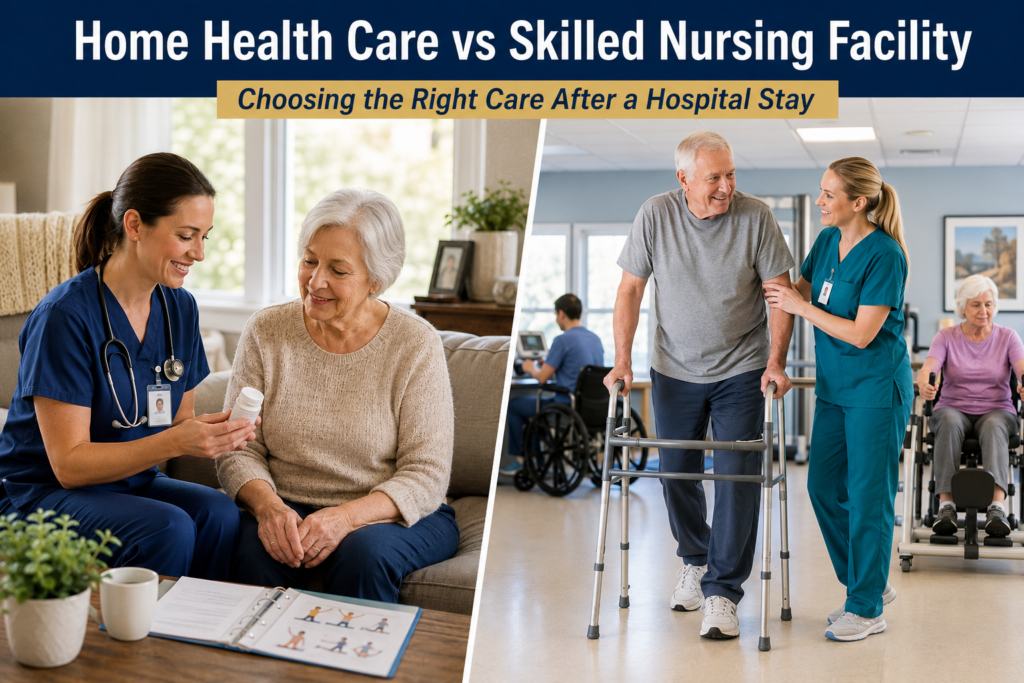
Home health care allows a senior to recover at home while receiving intermittent medical services prescribed by a physician.
Depending on the care plan, services may include:
- Registered nursing visits
- Physical therapy
- Occupational therapy
- Speech therapy
- Wound care
- Medication management
- Home safety evaluations
- Limited home health aide assistance
The senior continues living in their own home while healthcare professionals visit according to an established schedule.
For many older adults, recovering in familiar surroundings reduces stress and encourages independence.
What Is a Skilled Nursing Facility?
A skilled nursing facility (SNF) provides short-term, medically supervised rehabilitation in a licensed healthcare facility.
Services commonly include:
- 24-hour nursing care
- Daily physical therapy
- Occupational therapy
- Speech therapy
- IV medications
- Complex wound care
- Pain management
- Physician oversight
- Nutritional support
- Assistance with all activities of daily living
Most seniors stay in a skilled nursing facility for several days to several weeks before returning home.
Side-by-Side Comparison
| Home Health Care | Skilled Nursing Facility |
|---|---|
| Recover at home | Recover in a rehabilitation facility |
| Intermittent nurse visits | 24-hour nursing care |
| Therapy several times per week | Daily intensive therapy |
| Family provides much of the support | Staff provides most daily care |
| Greater independence | Higher level of supervision |
| Best for medically stable seniors | Best for seniors needing intensive rehabilitation |
When Home Health Care Is Usually the Better Choice
Home health care is often appropriate when a senior:
- Is medically stable
- Can safely move around the home
- Has family or caregiver support
- Needs therapy but not continuous supervision
- Can manage medications with assistance
- Has a safe living environment
Examples include:
- Recovery after uncomplicated joint replacement
- Mild pneumonia recovery
- Heart failure monitoring
- Diabetes education
- Medication adjustments
- Balance training to prevent falls
Remaining at home often improves emotional well-being while allowing seniors to maintain familiar routines.
When a Skilled Nursing Facility May Be the Better Choice
Some seniors require a higher level of medical care than home health services can safely provide.
A skilled nursing facility may be the better option if the senior:
- Cannot safely transfer or walk
- Requires daily rehabilitation
- Needs IV medications
- Requires complex wound care
- Has multiple new medications requiring close monitoring
- Has no caregiver available at home
- Is at high risk for falls
- Has experienced repeated hospitalizations
The goal is not permanent placement.
Instead, the facility provides intensive rehabilitation so the senior can safely return home as soon as possible.
Questions Families Should Ask Before Deciding
Before accepting a discharge plan, ask the hospital care team:
- Is my loved one medically stable enough to recover at home?
- How much assistance will they need each day?
- Can they safely use the bathroom independently?
- Will they need physical therapy every day?
- What happens if they fall at home?
- How often will nurses visit?
- Who manages medications?
- How long is rehabilitation expected to last?
These conversations help families understand the level of care truly needed rather than simply choosing the most convenient option.
Factors That Should Influence the Decision
Every senior’s recovery is unique.
Healthcare providers typically evaluate:
Mobility
Can the senior safely:
- Walk
- Transfer from bed to chair
- Climb stairs
- Use the bathroom independently?
Medical Complexity
Do they require:
- Oxygen
- IV therapy
- Frequent medication changes
- Specialized nursing care?
Home Environment
Is the home:
- Free of trip hazards?
- Accessible?
- Equipped with grab bars?
- Safe for recovery?
Family Support
Will someone be available to:
- Prepare meals?
- Help with bathing?
- Monitor medications?
- Attend follow-up appointments?
Does Medicare Cover Home Health Care and Skilled Nursing Facilities?
Many families assume Medicare pays for all post-hospital care, but coverage depends on the type of care needed and whether specific eligibility requirements are met.
Generally speaking:
Medicare May Cover Home Health Care If:
- A physician certifies that home health services are medically necessary.
- The senior is considered homebound.
- Care is provided through a Medicare-certified home health agency.
- Skilled nursing or therapy services are required.
Covered services often include:
- Skilled nursing
- Physical therapy
- Occupational therapy
- Speech-language therapy
- Medical social services
- Limited home health aide services
Home health care does not typically include long-term personal care such as housekeeping, meal preparation, or around-the-clock caregiving.
Medicare May Cover Skilled Nursing Facility Care If:
Medicare generally covers short-term skilled nursing facility care when eligibility requirements are met, including a qualifying hospital stay and a physician’s determination that skilled rehabilitation or nursing care is medically necessary.
Coverage rules can change, so families should always confirm current Medicare requirements before making decisions.
For the most current eligibility requirements and coverage details, families should review Medicare’s coverage of home health services and skilled nursing facility care before making post-hospital care decisions.
Warning Signs That Home May Not Be Safe Yet
Sometimes families understandably want their loved one to return home as quickly as possible. However, returning home too soon can increase the risk of falls, medication errors, dehydration, and hospital readmission.
Consider a skilled nursing facility first if your loved one:
- Cannot safely get out of bed without assistance.
- Needs help using the bathroom every time.
- Is confused or forgetful about medications.
- Has frequent dizziness or balance problems.
- Requires daily wound care.
- Needs oxygen monitoring.
- Has experienced multiple falls recently.
- Lives alone with little or no caregiver support.
Choosing additional rehabilitation now may actually help your loved one return home sooner and more safely.
Printable Decision Checklist
Before making a final decision, ask yourself:
☐ Has the physician recommended home health care or skilled nursing?
☐ Can my loved one safely walk without constant assistance?
☐ Is someone available every day to provide help at home?
☐ Are medications manageable outside of a healthcare facility?
☐ Does the home have grab bars, adequate lighting, and minimal fall hazards?
☐ Will transportation be available for follow-up appointments?
☐ Does my loved one require daily rehabilitation?
☐ Have we verified Medicare coverage?
☐ Do we understand the discharge instructions?
☐ Are we comfortable with the recommended care plan?
Expert Tips
- Never feel pressured to make an immediate discharge decision without understanding all available options.
- Ask the hospital case manager to explain why one care setting is being recommended over another.
- Tour a skilled nursing facility whenever possible before admission.
- If choosing home health care, prepare the home before discharge to reduce fall risks.
- Schedule follow-up appointments before leaving the hospital.
Common Mistakes Families Make
Assuming Home Is Always Best
While home is often the preferred setting, it may not provide the level of rehabilitation needed for a safe recovery.
Underestimating Caregiver Responsibilities
Family caregivers often become responsible for medication management, transportation, meal preparation, and mobility assistance.
Ignoring Fall Risks
A single fall after discharge can lead to another hospitalization.
Waiting Too Long to Ask Questions
Hospital discharge planning happens quickly. Families should ask questions early and participate actively in care planning.
Frequently Asked Questions
Is home health care the same as having a caregiver?
No. Home health care provides intermittent medical services. A caregiver may provide personal assistance such as bathing, dressing, meal preparation, and companionship.
Can someone move from a skilled nursing facility to home health care?
Yes. Many seniors transition from a skilled nursing facility to home health care as their condition improves.
Which option costs less?
Costs vary depending on services needed, insurance coverage, and length of care. Medicare and supplemental insurance may help cover certain medically necessary services.
Who decides which option is appropriate?
The recommendation is typically made by the hospital physician and discharge planning team, but families should actively participate in the decision-making process.
Key Takeaways
- Home health care and skilled nursing facilities serve different recovery needs.
- Home health care works best for medically stable seniors with adequate support at home.
- Skilled nursing facilities provide intensive rehabilitation and around-the-clock nursing care.
- Medicare coverage depends on eligibility and medical necessity.
- Asking the right questions before discharge helps families make informed decisions that promote a safer recovery.
Conclusion
Choosing between home health care vs skilled nursing facility care isn’t about selecting the “better” option—it’s about choosing the level of care that best supports your loved one’s recovery.
Some seniors thrive recovering at home with periodic nursing visits and therapy. Others benefit from short-term rehabilitation in a skilled nursing facility before returning home. Taking time to understand the differences, ask questions, and involve the healthcare team can help your family make a confident, informed decision that supports both safety and independence.
Related Articles
- Hospital Discharge Checklist for Seniors: Everything Families Should Do Before Going Home
- How to Choose a Skilled Nursing Facility After a Hospital Stay
- What Medicare Does and Does Not Pay for After a Hospital Stay
- How Caregivers Can Keep Emergency Health Records Organized
- How Caregivers Can Help Seniors Create an Emergency Medical Binder
- How Caregivers Can Help Seniors Prepare Healthcare Information for Emergencies