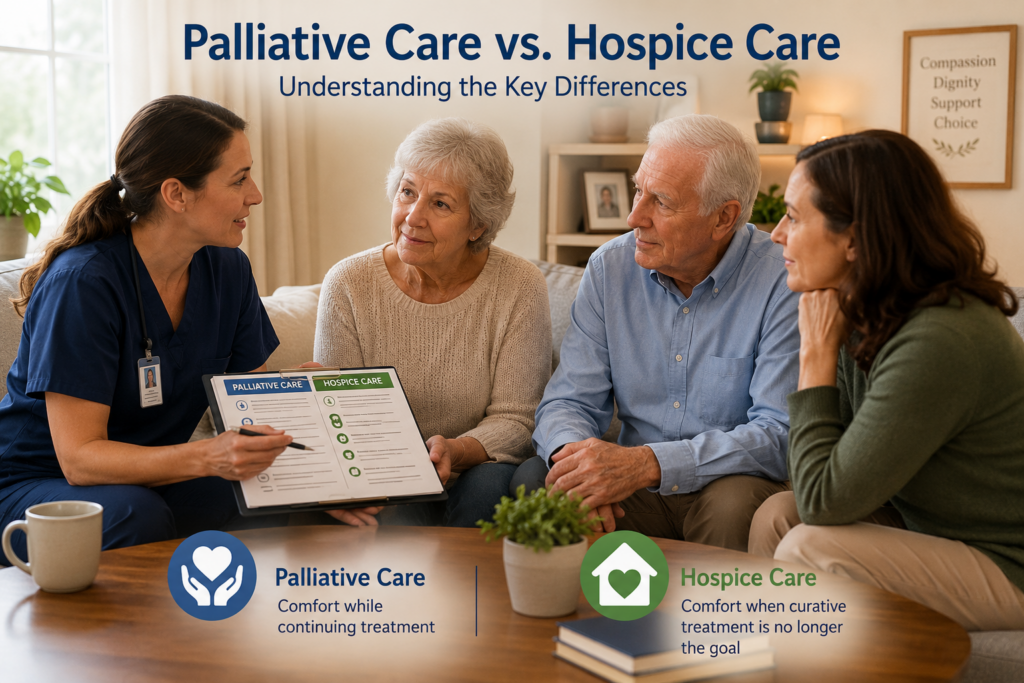
Palliative Care vs Hospice Care is one of the most common comparisons families encounter after a loved one is diagnosed with a serious illness. While both types of care focus on improving comfort and quality of life, they serve different purposes and are appropriate at different stages of a person’s healthcare journey. Understanding the differences can help families make informed decisions and choose the right care at the right time.
Understanding the difference can help seniors and their families make informed healthcare decisions, ask the right questions, and ensure their loved one receives the most appropriate care.
In this guide, you’ll learn how palliative care and hospice care compare, who qualifies for each, what services they provide, and how to determine which option may be right for your family.
This guide explains Palliative Care vs Hospice Care so families can better understand which option may be appropriate.
What Is Palliative Care?
Palliative care is specialized medical care that focuses on improving the quality of life for people living with serious illnesses. Unlike hospice care, palliative care can begin at any stage of an illness, even while a person is still receiving treatments intended to cure or slow the disease.
The goal is to help patients feel as comfortable and independent as possible by managing symptoms and providing emotional, practical, and medical support.
Palliative care is commonly provided for individuals living with conditions such as:
- Cancer
- Heart failure
- Chronic obstructive pulmonary disease (COPD)
- Kidney disease
- Parkinson’s disease
- Multiple sclerosis
- Alzheimer’s disease and other forms of dementia
- Serious neurological disorders
Many people receive palliative care for months or even years while continuing their normal medical treatment.
To learn more about how palliative care helps people living with serious illnesses, visit the National Institute on Aging’s guide to Palliative Care.
What Is Hospice Care?
Hospice care is also focused on comfort and quality of life, but it is intended for people whose illness has reached an advanced stage and when curative treatment is no longer the primary goal.
Rather than attempting to cure the illness, hospice helps patients live as comfortably and meaningfully as possible while supporting both the individual and their family.
Hospice care typically includes:
- Pain management
- Symptom control
- Nursing care
- Emotional support
- Spiritual care
- Social work services
- Medical equipment and supplies
- Bereavement support for families
Hospice can often be provided wherever the patient lives, including:
- Private homes
- Assisted living communities
- Skilled nursing facilities
- Hospice inpatient centers
Many families mistakenly believe hospice is only for the last few days of life. In reality, hospice can provide valuable support for weeks or months when someone meets eligibility requirements.
The Biggest Difference Between Palliative Care and Hospice Care
Although both programs focus on comfort and quality of life, the biggest difference is when each type of care begins.
Palliative care can start immediately after a serious illness is diagnosed and is often provided alongside chemotherapy, dialysis, surgery, rehabilitation, or other treatments designed to manage or cure the disease.
Hospice care, on the other hand, generally begins when treatment shifts away from curing the illness and toward maximizing comfort and quality of life.
A simple way to remember the difference is:
- Palliative care = Comfort while continuing treatment
- Hospice care = Comfort after curative treatment is no longer the goal
Similarities Between Palliative Care and Hospice Care
Despite their differences, these two approaches share many important goals.
Both emphasize:
- Relief from pain and uncomfortable symptoms
- Improved quality of life
- Emotional support for patients and families
- Better communication with healthcare providers
- Respect for the patient’s wishes and personal goals
- Coordinated care among multiple healthcare professionals
Both also recognize that serious illnesses affect not only the patient but the entire family.
Who Provides These Services?
Both palliative care and hospice care rely on multidisciplinary teams that work together to support patients and families.
Depending on individual needs, the care team may include:
- Physicians
- Nurse practitioners
- Registered nurses
- Social workers
- Chaplains or spiritual counselors
- Physical or occupational therapists
- Pharmacists
- Dietitians
- Counselors
- Trained volunteers
This team-based approach helps address physical, emotional, social, and spiritual needs rather than focusing solely on the illness itself.
Palliative Care vs. Hospice Care: Side-by-Side Comparison
Understanding Palliative Care vs Hospice Care becomes much easier when the differences are viewed side by side.
The following table highlights the key differences between palliative care and hospice care.
| Palliative Care | Hospice Care |
|---|---|
| Available at any stage of a serious illness | Typically provided when a terminal illness has reached an advanced stage |
| Can be provided alongside treatments intended to cure or manage the illness | Focuses on comfort when curative treatment is no longer the primary goal |
| No specific life expectancy requirement | Generally requires meeting hospice eligibility guidelines |
| May continue for months or years | Usually begins later in the course of an illness |
| Can be provided in hospitals, clinics, or at home | Often provided at home, assisted living communities, skilled nursing facilities, or hospice centers |
| Focuses on symptom management while treatment continues | Focuses entirely on comfort, dignity, and quality of life |
Who Pays for Palliative Care and Hospice Care?
Coverage depends on the type of care being provided.
Palliative Care
Palliative care is generally covered like other medical services.
Depending on the patient’s insurance, coverage may include:
- Medicare
- Medicaid
- Private health insurance
- Medicare Advantage plans
- Veterans benefits
Coverage varies depending on the services received and where care is provided.
Hospice Care
For eligible patients, Medicare provides comprehensive hospice coverage through the Medicare Hospice Benefit.
Covered services often include:
- Physician care
- Nursing visits
- Pain management
- Medical equipment
- Medical supplies
- Hospice medications related to the terminal illness
- Social work services
- Spiritual counseling
- Bereavement support for family members
Families should always review their individual insurance benefits and discuss available services with the hospice provider.
When Should Families Consider Palliative Care?
Many people wait far too long before asking about palliative care.
Families may want to discuss palliative care when a loved one:
- Has been diagnosed with a serious illness.
- Experiences ongoing pain or difficult symptoms.
- Has frequent hospitalizations.
- Needs help coordinating complex medical care.
- Wants additional support while continuing treatment.
Beginning palliative care earlier often improves symptom control, communication, and overall quality of life.
When Might Hospice Be the Better Choice?
Hospice may become appropriate when:
- Treatments are no longer improving the illness.
- The focus shifts toward comfort rather than cure.
- Hospitalizations become more frequent.
- Daily functioning continues to decline.
- The patient wishes to spend more time at home with family.
- Physicians believe hospice eligibility requirements are likely to be met.
Hospice allows patients to focus on comfort while providing families with valuable medical and emotional support.
Can Someone Transition from Palliative Care to Hospice Care?
Yes.
In fact, many patients begin with palliative care and later transition to hospice if their illness progresses.
Because both approaches emphasize comfort and quality of life, the transition is often seamless. Many of the same healthcare professionals continue supporting the patient while adjusting the care plan to meet changing medical needs.
The decision is made collaboratively among the patient, family, and healthcare providers.
Frequently Asked Questions
Families frequently ask questions about Palliative Care vs Hospice Care before making healthcare decisions.
Can someone receive palliative care and chemotherapy at the same time?
Yes. One of the defining features of palliative care is that it can be provided while patients continue treatments such as chemotherapy, radiation, dialysis, surgery, or rehabilitation.
Does choosing hospice mean giving up?
No. Hospice focuses on helping people live as comfortably and meaningfully as possible when curative treatment is no longer the primary goal.
Is palliative care only for cancer patients?
No. Palliative care supports individuals living with many serious illnesses, including heart disease, COPD, kidney disease, Parkinson’s disease, dementia, ALS, and other chronic conditions.
Can hospice care be provided at home?
Yes. Most hospice care is delivered wherever the patient lives, including private homes, assisted living communities, and skilled nursing facilities.
Who decides when hospice is appropriate?
The patient, family, physicians, and hospice professionals work together to determine whether hospice is the most appropriate option based on the patient’s goals, medical condition, and eligibility.
Final Thoughts
Although palliative care and hospice care share many similarities, understanding their differences helps families make informed healthcare decisions during challenging times.
Palliative care provides comfort and symptom management while patients continue receiving treatment for serious illnesses. Hospice care, by contrast, focuses on comfort, dignity, and quality of life when curative treatment is no longer the primary goal.
Knowing when each type of care may be appropriate allows families to have meaningful conversations with healthcare providers, plan ahead, and ensure their loved ones receive compassionate, patient-centered support throughout every stage of their healthcare journey.
Understanding Palliative Care vs Hospice Care allows families to make informed, compassionate decisions with greater confidence.
Disclaimer: This article is for educational purposes only and should not be considered medical, insurance, or legal advice. Always consult qualified healthcare professionals regarding treatment decisions, hospice eligibility, or palliative care options.
Related Articles
What Is Hospice Care? A Complete Guide for Seniors and Families
- Hospital Discharge Checklist for Seniors: Everything Families Should Do Before Going Home
- Home Health Care vs Skilled Nursing Facility: Which Is Right After a Hospital Stay?
- What Happens During the First Home Health Care Visit? A Step-by-Step Guide
- What Is a Healthcare Proxy and Why Is It Important?
- What Is a Durable Power of Attorney? A Guide for Seniors and Caregivers
- What Is Hospice Care? A Complete Guide for Seniors and Families