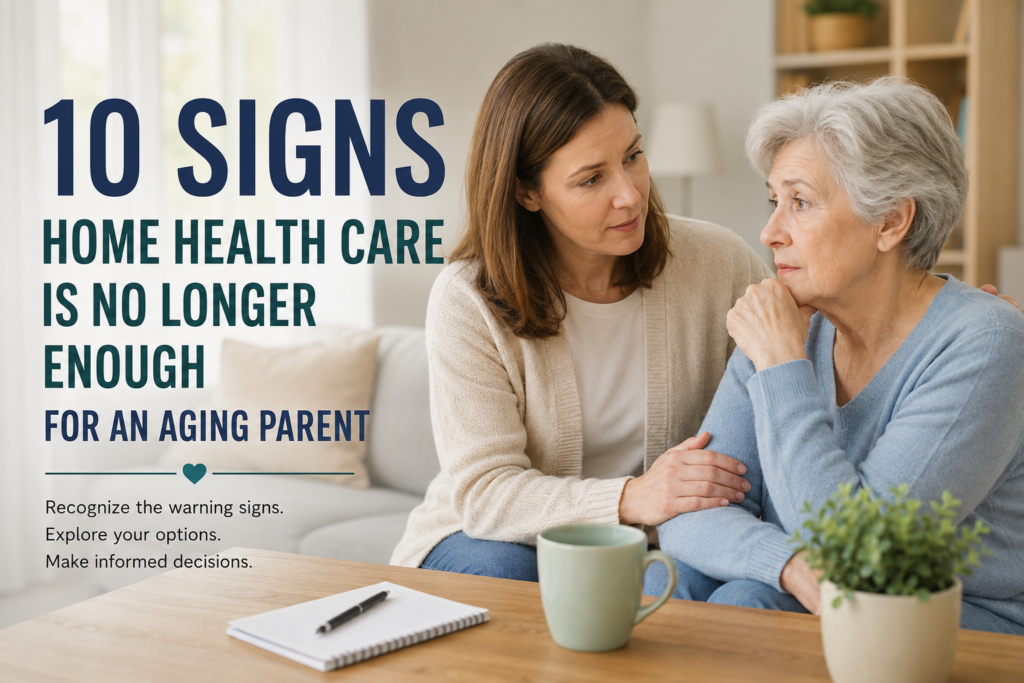
If home health care no longer enough is becoming a concern for your family, recognizing the warning signs early can help you make informed decisions before a crisis develops. Home health care is often an excellent option for seniors recovering from surgery, managing a chronic illness, or receiving skilled nursing or therapy services at home.
However, there may come a point when home health care is no longer enough to safely meet a senior’s needs. As health conditions progress, families are often faced with difficult decisions about whether additional care or a different level of support is necessary.
Recognizing the warning signs early can help families plan thoughtfully instead of making decisions during a medical emergency.
This guide explains ten common signs that an aging parent may need more care than home health services alone can provide and discusses the options available for continued support.
At a Glance
Best For: Family caregivers concerned about an aging parent’s changing care needs
Estimated Reading Time: 9–11 minutes
Last Updated: July 2026
You’ll Learn:
- When home health care may no longer be sufficient
- Warning signs families should not ignore
- When to speak with a physician
- Care options that may better meet a senior’s needs
Understanding the Limits of Home Health Care
Home health care provides skilled medical services in the home, but it is not designed to provide around-the-clock supervision or ongoing personal assistance throughout the day.
Depending on the physician’s orders, visits may occur only a few times each week. Between visits, family members often become the primary caregivers.
As a senior’s health changes, the amount of care needed may eventually exceed what home health services were intended to provide.
Knowing when that point has been reached is one of the most important responsibilities a caregiver can have.
When Home Health Care Is No Longer Enough
Recognizing the transition from occasional assistance to a higher level of care is not always easy. The following warning signs can help families determine when it’s time to discuss additional care options with a physician or care team.
Sign #1: Frequent Falls or Near Falls
Occasional balance problems are common as people age. However, repeated falls or frequent near falls may indicate that the senior is no longer safe at home with intermittent visits from home health professionals.
Warning signs include:
- Multiple falls within several months
- Difficulty standing without assistance
- Trouble walking even with a walker or cane
- Increasing fear of falling
- Unexplained bruises or injuries
Frequent falls increase the risk of fractures, head injuries, and hospitalization. If falls continue despite therapy and home safety improvements, additional supervision may be necessary.
Sign #2: Increasing Memory Loss or Confusion
Memory problems can make independent living much more difficult.
A senior who forgets medications, leaves the stove on, wanders outside, or becomes confused about time and place may require a higher level of care than periodic home health visits can provide.
Watch for signs such as:
- Missing medications
- Forgetting meals
- Becoming lost inside or outside the home
- Difficulty recognizing familiar people
- Increasing confusion during conversations
- Repeating the same questions throughout the day
Memory-related safety concerns should always be discussed with the senior’s physician.
Sign #3: Difficulty Managing Daily Activities
One of the clearest indicators that additional care may be needed is increasing difficulty performing activities of daily living.
These activities include:
- Bathing
- Dressing
- Using the bathroom
- Grooming
- Preparing meals
- Eating independently
- Moving safely around the home
When assistance is needed with several of these activities every day, families should begin discussing additional care options with healthcare providers.
Sign #4: Repeated Hospital or Emergency Room Visits
Frequent hospitalizations often indicate that a senior’s medical needs have become more complex.
Examples include:
- Multiple emergency room visits within a few months
- Repeated hospital admissions
- Returning to the hospital shortly after discharge
- Worsening chronic medical conditions
- Increasing medication complications
Repeated hospital visits can place tremendous stress on both seniors and caregivers and may suggest that more comprehensive care is needed.
Sign #5: Medications Are No Longer Being Managed Safely
Medication management becomes increasingly difficult when multiple prescriptions, changing dosages, and complex schedules are involved.
Warning signs include:
- Missed medications
- Taking medications twice
- Running out of prescriptions
- Confusion about dosage instructions
- Difficulty opening medication containers
- Missed pharmacy refills
Medication errors are one of the leading reasons older adults require emergency medical care.
Printable Caregiver Checklist
Ask yourself these questions:
- Has my parent fallen recently?
- Are medications being taken correctly?
- Is personal hygiene declining?
- Is my parent eating regular meals?
- Are medical appointments being missed?
- Is memory getting noticeably worse?
- Is my parent safe when left alone?
- Am I worried every time I leave the house?
- Have hospital visits become more frequent?
- Is caregiving becoming more than our family can safely manage?
Answering “yes” to several of these questions may indicate it’s time to discuss additional care options with your parent’s healthcare team.
Sign #6: Caregiver Burnout Is Becoming a Serious Concern
Family caregivers often focus entirely on the needs of their loved one while overlooking their own physical and emotional health.
Over time, the demands of caregiving can become overwhelming, particularly if one person is providing most of the care.
Warning signs of caregiver burnout include:
- Constant exhaustion
- Trouble sleeping
- Increased stress or anxiety
- Feeling overwhelmed every day
- Neglecting personal health appointments
- Loss of interest in hobbies or social activities
- Feeling frustrated or resentful
When caregivers become exhausted, it becomes more difficult to provide safe, consistent care. Seeking additional support is not a sign of failure—it is often the best decision for both the caregiver and the senior.
Sign #7: The Home Is No Longer a Safe Environment
Even after making recommended home safety improvements, some homes may no longer meet a senior’s changing needs.
Watch for situations such as:
- Difficulty navigating stairs
- Frequent wandering
- Unsafe use of appliances
- Inability to evacuate during an emergency
- Increasing clutter creating trip hazards
- Unsafe transfers into or out of bed or chairs
If the home environment can no longer be adapted safely, a different level of care may be appropriate.
Sign #8: Chronic Medical Conditions Are Becoming More Difficult to Manage
Many older adults live with multiple chronic health conditions that gradually become more complicated over time.
Examples include:
- Heart failure
- COPD
- Diabetes
- Parkinson’s disease
- Stroke recovery
- Advanced arthritis
If symptoms are becoming harder to control despite regular home health visits, additional daily medical supervision or a higher level of care may provide better support.
Sign #9: Social Isolation Is Affecting Quality of Life
Many seniors who remain at home spend long periods alone between visits from caregivers or home health professionals.
Signs that isolation may be becoming a problem include:
- Rarely leaving the home
- Loss of interest in favorite activities
- Depression or sadness
- Limited interaction with family or friends
- Declining appetite
- Withdrawal from conversations
Loneliness can affect both emotional and physical health. A care setting that offers daily social interaction may significantly improve a senior’s quality of life.
Sign #10: The Family Is Constantly Responding to Crises
Perhaps the clearest indication that home health care is no longer enough is when families find themselves constantly reacting to emergencies.
Examples include:
- Repeated calls from neighbors
- Frequent urgent trips to the home
- Multiple medication emergencies
- Falls requiring assistance
- Wandering incidents
- Increasing overnight concerns
- Regular calls to emergency services
If nearly every week brings another crisis, it may be time to discuss whether a more supportive care environment would better meet the senior’s needs.
What Care Options May Be Available?
If home health care is no longer providing enough support, families may wish to explore other care options.
Depending on the senior’s health and personal preferences, these may include:
- Increased in-home private caregiving
- Assisted living communities
- Memory care communities
- Skilled nursing facilities
- Hospice or palliative care when appropriate
Every family’s situation is unique. The goal is to match the level of care with the senior’s current medical, physical, and emotional needs.
When Should You Talk to the Doctor?
Do not wait for a major emergency before discussing changing care needs.
Schedule a conversation with the senior’s physician if you notice:
- Increasing falls
- Worsening memory
- Repeated hospitalizations
- Significant weight loss
- Declining mobility
- Difficulty managing medications
- Increasing caregiver stress
- Growing concerns about safety
The physician can evaluate the senior’s condition and recommend appropriate next steps, including additional services or referrals for higher levels of care. Learn more about Medicare-covered home health services by visiting the official Medicare Home Health Care page.
Frequently Asked Questions
Does needing more care mean home health care failed?
No. Home health care is designed to meet specific medical needs for a limited period or under certain conditions. As a person’s health changes, their care needs may naturally change as well.
Can a senior receive both home health care and private caregivers?
Yes. Many families combine skilled home health services with private-duty caregivers who provide additional daily assistance.
Is assisted living always the next step?
Not necessarily. Some seniors only need additional in-home support, while others may benefit from assisted living, memory care, or skilled nursing. The right choice depends on the individual’s health, safety, and personal preferences.
Who decides when a higher level of care is needed?
The decision is usually made collaboratively by the senior, family members, physicians, and healthcare professionals after evaluating the senior’s overall condition and care needs.
Final Thoughts
Recognizing that home health care is no longer enough can be an emotional and difficult realization for families. However, identifying the warning signs early allows everyone involved to make thoughtful decisions rather than being forced into choices during a medical emergency.
The goal is not simply to provide more care—it is to provide the right level of care. Whether that means increasing in-home assistance, moving to an assisted living community, or considering skilled nursing care, the focus should always remain on the senior’s safety, health, dignity, and quality of life.
By paying attention to these ten warning signs and maintaining open communication with healthcare providers, families can make informed decisions that support their loved one’s well-being now and in the future.
Related Articles
- What Happens During the First Home Health Care Visit? A Step-by-Step Guide
- How Caregivers Can Help Seniors Prepare for Hospital Visits
- How Caregivers Can Help Seniors Organize Important Medical Information
- How Caregivers Can Keep Emergency Health Records Organized
- How Caregivers Can Help Seniors Maintain an Updated Medication List
- How to Prepare Your Home Before Home Health Care Begins