Estimated Reading Time: 11 minutes
Last Updated: July 2, 2026
At a Glance
Best For: Seniors and family caregivers preparing for home health care after a hospital stay.
Who Should Read This: Anyone expecting home health nursing, therapy, or aide services and wanting to create a safe, organized home environment before the first visit.
What You’ll Learn:
- How to prepare your home before home health care begins
- Simple safety improvements to make before the first visit
- What equipment and information to have ready
- How to help nurses and therapists provide better care
- Common preparation mistakes families should avoid
How to Prepare Your Home Before Home Health Care Begins
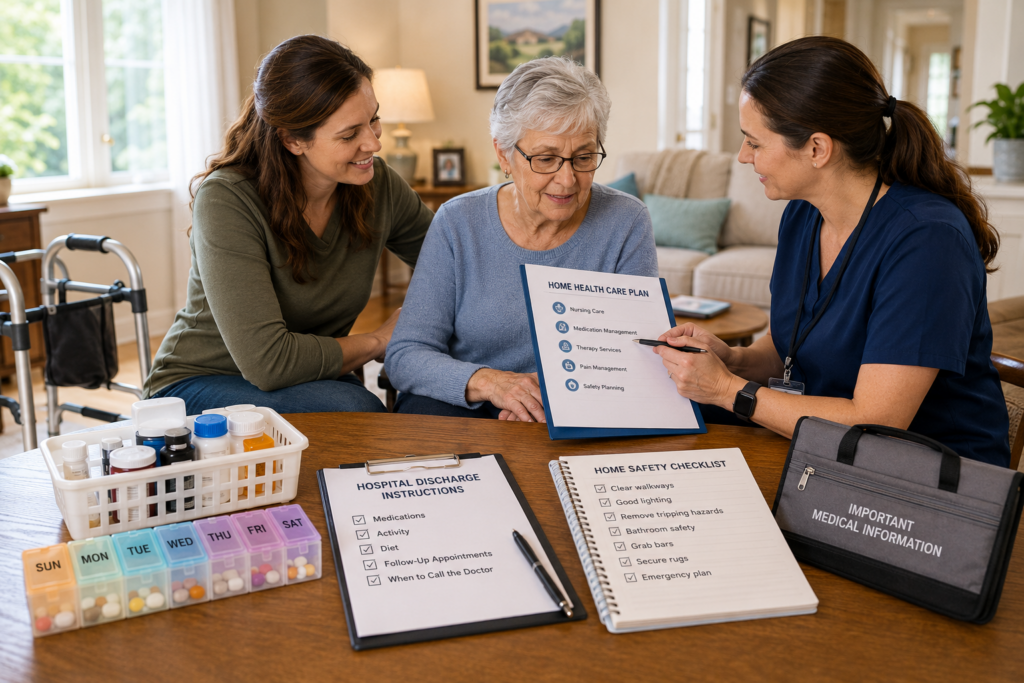
Knowing how to prepare your home before home health care begins is one of the most important steps families can take after a hospital stay. Preparing your home before home health care begins helps nurses and therapists deliver safer, more effective care while reducing fall risks and avoiding unnecessary delays. This guide explains how to prepare your home before home health care begins with simple, practical steps every family should complete before the first home health visit.
Why Home Preparation Matters
A safe, organized home helps healthcare professionals deliver better care while reducing the risk of falls, medication errors, and unnecessary hospital readmissions. Small improvements completed before the first visit can make daily care easier for both the patient and family caregivers.
Preparing ahead also gives everyone confidence. Instead of rushing to find medications or clear walking paths while a nurse is present, everything is ready when care begins.
Step 1: Create Safe Walking Paths
Walk through the home and remove anything that could become a tripping hazard.
Pay particular attention to:
- Throw rugs
- Electrical cords
- Shoes left on the floor
- Small furniture
- Boxes and storage bins
- Pet toys
If your loved one uses a walker or wheelchair, make sure there is enough room to move comfortably throughout the home.
Step 2: Organize All Medications
One of the first things a home health nurse will do is review medications.
Gather:
- Prescription medications
- Over-the-counter medications
- Vitamins
- Supplements
- Medication schedules
- Pill organizers
Keep everything together in one location so the nurse can quickly perform medication reconciliation.
Step 3: Prepare Medical Documents
Place important healthcare documents in a folder or binder.
Include:
- Hospital discharge paperwork
- Medication list
- Insurance cards
- Medicare information
- Physician contact information
- Specialist contact information
- Advance directives
- Emergency contact list
Having these documents readily available saves time and helps prevent communication errors.
Step 4: Set Up a Comfortable Recovery Area
Choose a room where your loved one will spend most of their recovery.
Consider:
- Easy access to a bathroom
- Good lighting
- Comfortable seating
- Nearby electrical outlets
- Space for walkers or wheelchairs
- Room for visiting healthcare professionals
If climbing stairs is difficult, consider temporarily relocating the recovery area to the main floor.
Step 5: Improve Home Lighting
Good lighting helps prevent falls.
Check that:
- Hallways are well lit.
- Bedrooms have bedside lamps.
- Bathrooms have bright lighting.
- Stairways are fully illuminated.
- Nightlights are installed in key areas.
Simple lighting improvements can dramatically reduce nighttime accidents.
Step 6: Prepare Medical Equipment
If equipment has been ordered, verify that it has arrived before the first visit.
This may include:
- Walker
- Wheelchair
- Bedside commode
- Shower chair
- Raised toilet seat
- Hospital bed
- Blood pressure monitor
- Oxygen equipment (if prescribed)
Place equipment where it will be used and make sure family members understand basic operation. Families can also review the official Medicare information about durable medical equipment (DME) to better understand which medical equipment may be covered and how to obtain it.
Step 7: Make Bathrooms Safer
Bathrooms are one of the highest-risk areas for falls.
Before home health care begins:
- Install non-slip bath mats.
- Remove loose rugs.
- Add grab bars if available.
- Place frequently used items within easy reach.
- Consider a shower chair if recommended by the hospital.
Even small improvements can significantly increase safety during recovery.
Step 8: Prepare for the First Home Health Visit
The first visit usually involves an assessment rather than treatment alone. The nurse or therapist will review your loved one’s medical history, medications, discharge instructions, and overall recovery goals.
Before the appointment:
- Have all discharge paperwork available.
- Write down any questions for the care team.
- Make sure someone familiar with the patient’s medical history is present if possible.
- Ensure pets are secured if they may interfere with the visit.
- Allow enough time so the healthcare professional is not rushed.
Step 9: Prepare Family Caregivers
Home health care does not replace family involvement. Family caregivers often become an important part of the recovery process.
Before services begin, understand:
- Medication responsibilities
- Follow-up appointment schedules
- Therapy exercises
- Fall prevention strategies
- Emergency procedures
- Who to contact after hours
The more prepared caregivers are, the smoother recovery usually becomes.
Step 10: Make Emergency Information Easy to Find
Every home should have emergency information readily available.
Include:
- Primary physician
- Specialists
- Preferred hospital
- Emergency contacts
- Medication list
- Allergies
- Insurance information
- Pharmacy phone number
Store this information somewhere visible and easy to access during an emergency.
Step 11: Prepare for Therapy Sessions
If physical or occupational therapy is part of the care plan, create enough open space for exercises.
Move furniture if necessary and make sure the therapist has room to safely evaluate:
- Walking
- Balance
- Transfers
- Strength exercises
- Use of assistive devices
A clutter-free environment improves both safety and treatment effectiveness.
Step 12: Reduce Infection Risks
Protect your loved one by maintaining a clean recovery environment.
Simple steps include:
- Wash hands frequently.
- Keep commonly touched surfaces clean.
- Follow wound care instructions carefully.
- Store medical supplies in a clean, dry location.
- Dispose of medical waste properly.
These habits help reduce the risk of complications during recovery.
Printable Home Preparation Checklist
Before home health care begins, make sure you have completed the following:
☐ Remove tripping hazards throughout the home
☐ Organize all medications
☐ Prepare hospital discharge paperwork
☐ Gather insurance and Medicare information
☐ Create a comfortable recovery area
☐ Improve lighting throughout the home
☐ Set up prescribed medical equipment
☐ Make bathrooms safer
☐ Prepare emergency contact information
☐ Write down questions for the home health team
Expert Tips
- Complete your home preparation before your loved one arrives home whenever possible.
- Walk through the house using a walker to identify tight spaces and obstacles.
- Keep frequently used items within easy reach to reduce unnecessary bending or climbing.
- Encourage your loved one to ask questions during every home health visit.
- Update medication lists immediately whenever changes occur.
Common Mistakes to Avoid
Waiting Until the Day of the First Visit
Preparing ahead reduces stress and allows healthcare professionals to focus on patient care.
Forgetting to Organize Medical Records
Searching for paperwork during the visit wastes valuable time and may delay treatment.
Ignoring Small Fall Hazards
Loose rugs, clutter, and poor lighting remain leading causes of falls after hospital discharge.
Assuming Home Health Staff Provide Around-the-Clock Care
Home health visits are scheduled. Family caregivers remain an essential part of the recovery team between visits.
Frequently Asked Questions
Should I prepare the home before my loved one leaves the hospital?
Yes. Completing preparations before discharge makes the transition home safer and less stressful.
Does the home health nurse inspect the home?
Yes. During the initial assessment, the nurse often evaluates the home for safety concerns and identifies potential fall risks or barriers to recovery.
Do I need special medical equipment before the first visit?
Only if your physician has prescribed it. Confirm that all ordered equipment has been delivered before your loved one returns home.
Can family members attend the first home health visit?
Absolutely. Family caregivers are encouraged to participate so they understand the care plan and can ask questions.
Key Takeaways
- Preparing your home before home health care begins improves safety and supports a smoother recovery.
- Organizing medications, paperwork, and medical equipment helps healthcare professionals provide more efficient care.
- Simple home safety improvements can reduce fall risks and prevent hospital readmissions.
- Family caregivers play a vital role in successful recovery.
- Planning ahead gives everyone greater confidence during the transition from hospital to home.
Conclusion
Knowing how to prepare your home before home health care begins helps families create a safer, more organized environment for recovery. Taking time to prepare your home before home health care begins allows nurses and therapists to focus on providing care while reducing avoidable safety risks.By making a few practical improvements before the first visit, families can reduce stress, improve communication with healthcare professionals, and give their loved one the best opportunity for a successful recovery at home.
Related Articles
- How to Choose a Home Health Care Agency: 20 Questions Every Family Should Ask
- Home Health Care vs Skilled Nursing Facility: Which Is Right After a Hospital Stay?
- What Medicare Does and Does Not Pay for Home Health Care
- Hospital Discharge Checklist for Seniors: Everything Families Should Do Before Going Home
- How to Choose a Skilled Nursing Facility After a Hospital Stay
- How Caregivers Can Keep Emergency Health Records Organized