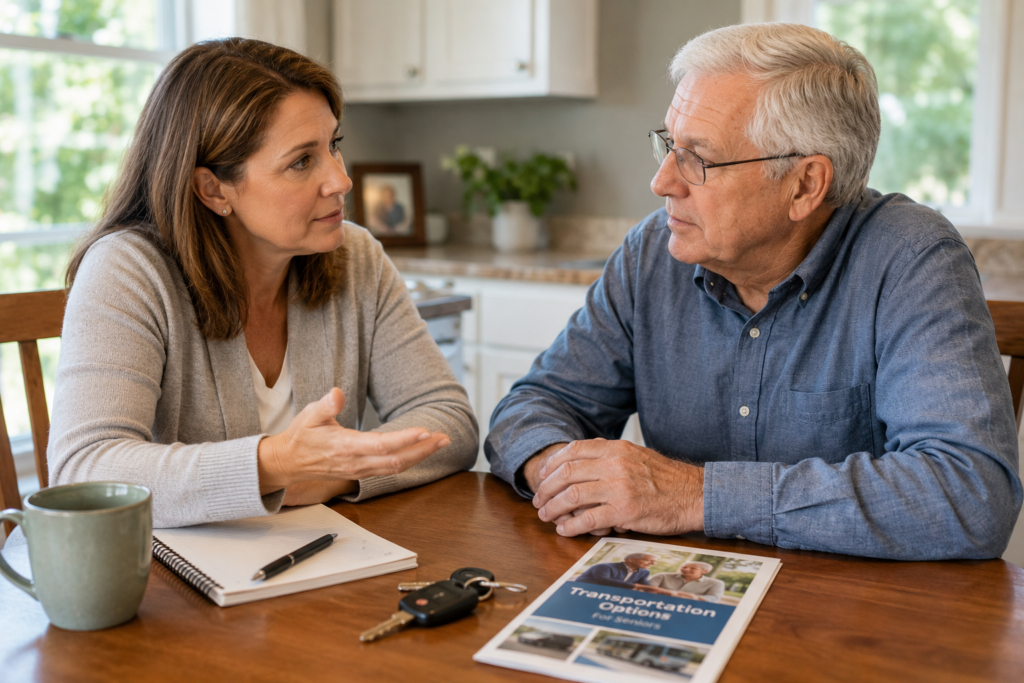
For many older adults, driving represents far more than transportation. It symbolizes independence, freedom, and the ability to stay connected with friends, family, healthcare providers, and the community.
Because of this, deciding when it may be time to stop driving is one of the most difficult conversations families face.
Learning when it is time to stop driving allows families to plan ahead instead of reacting after an accident.
While age alone does not determine whether someone can drive safely, changes in vision, reaction time, memory, physical abilities, and judgment can gradually increase the risk of accidents. Knowing what warning signs to watch for can help families have proactive, respectful conversations before a serious incident occurs.
In this guide, you’ll learn how aging can affect driving, the warning signs that indicate it may be time for an evaluation, how to approach the conversation compassionately, and alternatives that help older adults maintain their independence.
Does Age Automatically Mean Someone Should Stop Driving?
No.
Many adults continue driving safely well into their 70s, 80s, and beyond. Safe driving depends on an individual’s physical health, cognitive abilities, vision, and overall driving skills—not simply their age.
However, because certain medical conditions become more common as people age, regular evaluation becomes increasingly important.
Conditions that may affect driving include:
- Vision impairment
- Arthritis or reduced mobility
- Parkinson’s disease
- Stroke
- Dementia or Alzheimer’s disease
- Diabetes with episodes of low blood sugar
- Medication side effects
- Sleep disorders
The goal is not to take away independence unnecessarily, but to ensure everyone on the road remains safe.
Common Warning Signs That Driving May No Longer Be Safe
Most families notice small changes long before a major accident occurs.
Watch for patterns rather than isolated incidents.
Getting Lost on Familiar Routes
One of the earliest warning signs may be difficulty navigating places the driver has visited for years.
Examples include:
- Missing familiar turns
- Forgetting destinations
- Becoming confused in familiar neighborhoods
- Needing GPS for routine errands
Occasional mistakes happen to everyone, but repeated confusion deserves attention.
Slower Reaction Times
Safe driving requires quick decisions.
Aging can naturally slow reaction times, making it more difficult to:
- Respond to sudden stops
- Avoid pedestrians
- Merge into traffic
- Navigate busy intersections
- React to emergency vehicles
When slower reactions combine with vision or mobility limitations, driving risk increases.
New Dents, Scratches, or Minor Accidents
Small vehicle damage sometimes tells an important story.
Pay attention if your loved one begins accumulating:
- Scraped bumpers
- Garage door damage
- Mailbox collisions
- Curb strikes
- Parking lot fender benders
Many older drivers dismiss these as isolated events, but multiple incidents may indicate declining driving skills.
Difficulty Staying in the Lane
Family members riding with an older driver may notice:
- Drifting between lanes
- Driving too close to the shoulder
- Inconsistent speed
- Trouble maintaining lane position
- Delayed responses to traffic signals
These behaviors should not be ignored, especially if they become more frequent.
Increased Anxiety While Driving
Some older adults recognize changes before anyone else does.
They may begin avoiding:
- Highways
- Night driving
- Heavy traffic
- Left turns
- Bad weather
- Unfamiliar destinations
While limiting driving can be a reasonable safety strategy, increasing anxiety may also signal that driving has become more difficult than it once was.
Medical Conditions That Can Affect Driving Ability
Several health conditions can impair the skills needed for safe driving.
Vision Changes
Safe driving depends heavily on good vision.
Problems such as cataracts, glaucoma, or macular degeneration can make it harder to:
- Read road signs
- Judge distances
- See pedestrians
- Detect traffic signals
- Drive safely at night
Regular eye examinations become increasingly important with age.
Memory and Cognitive Changes
Memory loss affects more than remembering names or appointments.
Cognitive impairment may reduce the ability to:
- Make quick decisions
- Recognize hazards
- Follow traffic rules
- Process multiple situations simultaneously
- React appropriately during unexpected events
These changes may develop gradually, making them difficult for families to recognize at first.
Limited Physical Mobility
Driving requires strength and flexibility.
Reduced mobility can affect the ability to:
- Turn the steering wheel quickly
- Check blind spots
- Move between the gas and brake pedals
- Look over the shoulder when changing lanes
- Enter and exit the vehicle safely
Physical limitations can often increase risk even when cognitive abilities remain strong.
Medication Side Effects
Many prescription and over-the-counter medications can impair driving.
Potential side effects include:
- Drowsiness
- Dizziness
- Blurred vision
- Slower reaction times
- Confusion
If a loved one starts a new medication, it’s important to ask their healthcare provider whether driving restrictions are recommended.
Why Families Should Act Before a Serious Accident
Waiting until after a crash can have devastating consequences.
Addressing concerns early allows families to:
- Explore medical evaluations.
- Consider driving assessments.
- Gradually reduce driving when appropriate.
- Develop alternative transportation plans.
- Preserve the older adult’s dignity by involving them in the decision-making process.
Planning ahead often makes the transition easier than responding to an emergency.
How to Start the Conversation About Driving
Talking with an aging parent about driving is rarely easy. Because driving is closely tied to independence, the discussion can feel personal and emotional.
Approaching the conversation with empathy rather than criticism often leads to a more productive outcome.
Consider these tips:
- Choose a calm time when no immediate incident has occurred.
- Focus on safety rather than age.
- Use specific observations instead of general accusations.
- Listen carefully to your loved one’s concerns.
- Involve them in finding solutions whenever possible.
For example, instead of saying, “You shouldn’t be driving anymore,” you might say, “I’ve noticed you’ve seemed uncomfortable driving at night lately. How are you feeling about it?”
This approach encourages collaboration instead of confrontation.
Should Your Loved One Have a Professional Driving Evaluation?
If there is uncertainty about driving ability, a professional driving evaluation can provide objective guidance.
Driving evaluations are often performed by occupational therapists or certified driver rehabilitation specialists. These assessments typically include:
- Vision screening
- Cognitive testing
- Physical mobility assessment
- Reaction time evaluation
- On-road driving assessment
The results can help families and healthcare providers determine whether it is safe to continue driving, whether restrictions are appropriate, or whether driving should stop altogether.
NHTSA advises that driving ability should not be determined by age alone and provides guidance on how changes in vision, physical fitness, and reflexes may affect driving safety. Here are the older-driver safety resources from the National Highway Traffic Safety Administration.
Who Can Recommend That Someone Stop Driving?
Several professionals may recommend limiting or stopping driving if safety becomes a concern.
These may include:
- Primary care physicians
- Neurologists
- Occupational therapists
- Eye care specialists
- Driver rehabilitation specialists
Depending on state laws, healthcare providers may also have responsibilities regarding medically impaired drivers. Families should ask their healthcare provider about recommendations based on their loved one’s specific medical condition.
What If Your Loved One Refuses to Stop Driving?
This is one of the most difficult situations families encounter.
If safety concerns continue despite repeated conversations:
- Continue discussing concerns respectfully.
- Ask the physician to address driving during a medical appointment.
- Consider scheduling a professional driving evaluation.
- Remove access to the vehicle only if immediate safety risks exist.
- Work together to develop transportation alternatives before driving privileges are lost.
The goal should always be protecting both the older adult and others on the road while preserving dignity whenever possible.
Transportation Alternatives That Help Maintain Independence
Giving up driving does not have to mean giving up an active lifestyle.
Many communities offer transportation options such as:
- Family and friends
- Senior transportation programs
- Public transportation
- Volunteer driver services
- Ride-sharing services
- Community shuttles
- Non-emergency medical transportation
Planning these alternatives in advance can make the transition less stressful and help older adults remain socially connected.
Planning transportation alternatives before someone needs to stop driving helps preserve independence and reduces stress.
Frequently Asked Questions
Should I take away my parent’s car keys?
Removing car keys should generally be a last resort. Whenever possible, involve your loved one in the decision and seek guidance from their healthcare provider or a professional driving evaluator first. Families often wonder when someone should stop driving before taking this step.
How often should older adults have their driving abilities evaluated?
There is no universal age for mandatory evaluations. However, regular vision exams, routine medical checkups, and honest discussions about driving become increasingly important as people age or develop medical conditions that may affect driving.
Can someone with early dementia continue driving?
It depends on the individual and the stage of the disease. Some people with very early cognitive impairment may still drive safely for a period of time, while others may require immediate evaluation. Decisions should be based on medical assessments rather than diagnosis alone.
What if my parent becomes isolated after stopping driving?
Transportation planning is an important part of maintaining independence. Many communities offer senior transportation services, volunteer driver programs, and other options that help older adults remain active and connected.
Final Thoughts
Deciding when it is time to stop driving is never easy, and knowing when to stop driving is one of the most difficult decisions many families face. By recognizing warning signs early, seeking professional guidance when needed, and approaching the discussion with empathy, families can help protect their loved one’s safety while preserving as much independence as possible.
The transition away from driving is not simply about giving up the car—it is about creating a plan that allows older adults to continue participating in the activities and relationships that matter most.
Key Takeaways
- Age alone does not determine whether someone should stop driving.
- Changes in vision, cognition, mobility, and reaction time can affect driving safety.
- Families should watch for patterns of unsafe driving rather than isolated incidents.
- Professional driving evaluations can help determine when it is time to stop driving safely.
- Respectful conversations and advance transportation planning often make the transition easier.
- Helping an older adult stop driving safely is about protecting independence through thoughtful planning, not taking it away.
Related Articles
Signs That Aging Parents May Need Additional Home Safety Support
Simple Daily Check-In Ideas for Families Supporting Aging Parents
How Caregivers Can Use Technology to Check on Aging Parents Safely
Easy-to-Use Technology That Helps Seniors Stay Independent
How Caregivers Can Help Seniors Prepare for Specialist Medical Appointments
How Caregivers Can Help Seniors Track Important Medical Appointments